ZEDEDA · 17 min read
Fitting 4.4x More Context on Jetson: Implementing TurboQuant on NVIDIA’s AGX Thor
Implementing KV-cache compression on Jetson AGX Thor, from a PyTorch baseline to fused Triton kernels and real LLM inference.
Edge AI Engineer at ZEDEDA
I get language and vision models running on devices, test how they behave, and work out which setup makes sense for the person using it.
Implementing KV-cache compression on Jetson AGX Thor, from a PyTorch baseline to fused Triton kernels and real LLM inference.
A vision-language inspection pipeline for printed circuit boards, combining deterministic camera checks with prompt-based inspection policies on NVIDIA Jetson Thor.
A practical guide to building and deploying vehicle recognition at the edge, covering model choices, hardware constraints, and orchestration with ZEDEDA.
Modified crop health monitoring and pesticide spraying system using NDVI and Semantic Segmentation: An AGROCOPTER based approach
Developed a computer vision pipeline for UAVs to monitor crop health and detect anomalies.
app.register_blueprint(chat_bp, url_prefix='/chat')
app.register_blueprint(rag_bp, url_prefix='/rag')

# Initialize database
init_db(app)A document-grounded Discord assistant with a Flask backend, retrieval pipeline, and containerized services.
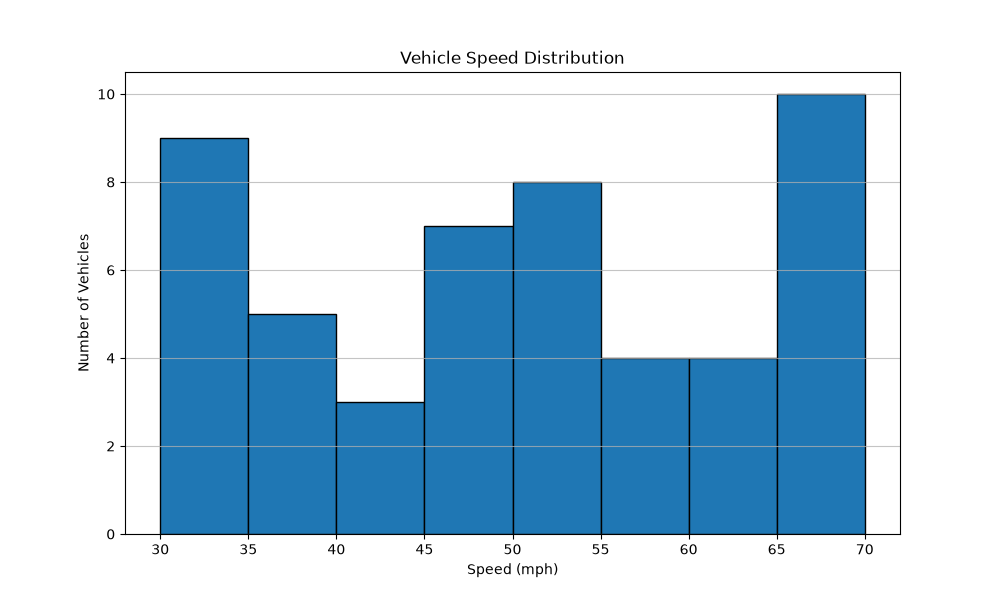
A synthetic traffic-data pipeline exploring processing, privacy-related techniques, and visualization in Python.
HOW I WORK
One example. Other problems need different tools and tests.
Follow the connected decisions down the page. Select a topic to expand its branch. Select the expanded center node to return, or press Escape. Each decision can be explored independently.
The customer needed fast feedback and room to iterate.
The requirementTopics for Define “best”
The customer wanted to start using an LLM and iterate.
Both models fit the available hardware.
Responsive use without throttling.
Fast feedback mattered to the workflow.
A faster answer still needs to be useful for the task.
Leave room for repeated attempts.
Choose an LLM for the available device.
Start quickly and keep improving.
Choose the smaller model for that workflow.
Keep the interaction responsive.
The smaller model needs a task-specific quality floor.
The smaller model avoided throttling in this case.
Benchmarks and quality checks informed the choice.
Extensive load tests came before A/B trials.
Verify MVP stability, then use A/B testing.
A smaller model kept iteration responsive. Its answers still had to be useful.
The tradeoffTopics for Make the tradeoffs
The bigger model answered better, more slowly.
Context length and input content were levers to test.
Separate time to first token, complete-answer latency, and throughput.
Hardware capacity did not settle the choice.
Fast feedback suited the customer’s workflow.
Load testing checked behavior under demand.
A new capability should be easy to get used to.
Waiting and throttling would interrupt iteration.
The setup had to suit how the customer worked.
Check quality and load, stabilize an MVP, then compare in use.
The evaluationTopics for Test it beyond the demo
Compare task-relevant quality with public benchmarks; neither substitutes for the other.
Check slow requests and throttling under demand, not just average speed.
Check quality alongside speed.
Cross-check with public results.
Build an MVP and verify stability.
Only then compare alternatives with A/B tests.
A/B testing surfaced unexpected pain points.
Investigate cases the earlier tests missed.
Control the setup, investigate variation, and tune the useful settings.